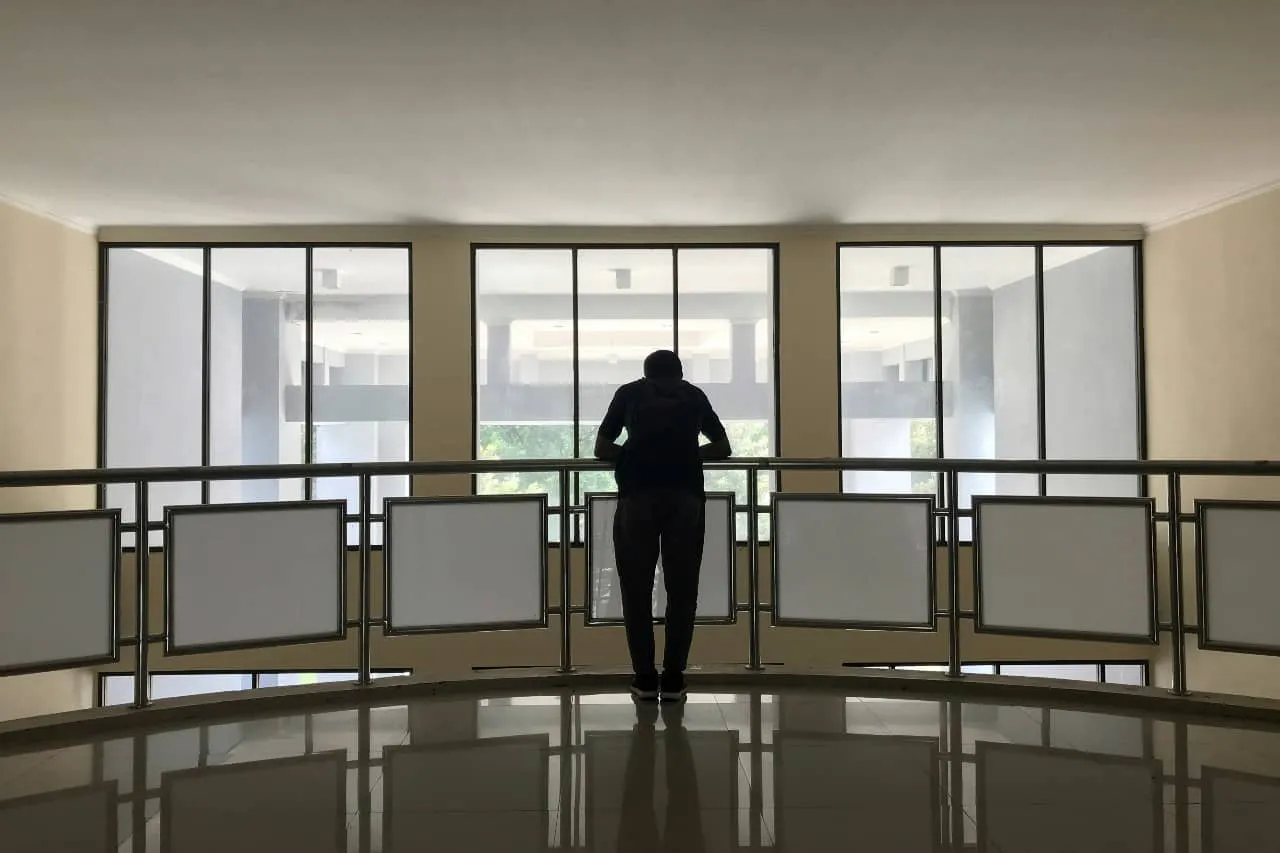
Today, we’re addressing a problem that gets whispered about in boardrooms but rarely confronted head-on: executive isolation.
In our decades coaching C-suite leaders at Skyline Group International, we’ve seen firsthand how the top job, while exhilarating, can feel like standing on a mountaintop: the view is extraordinary, but the air is thin, and there’s rarely anyone up there with you.
But executive isolation isn’t merely a personal struggle; it’s a strategic liability that erodes decision-making quality, organizational resilience, and long-term growth.
Drawing from data, real-world examples, and our perspectives, we’ll unpack how isolation takes hold, how it compounds through echo chambers into strategic blind spots, and why the cost of inaction is higher than most leaders realize.
Consider this your practical guide - professional insight with a dash of candor, because leading isn’t all spreadsheets and strategy sessions; sometimes it’s about admitting you’re human.
What is Executive Isolation?
Executive isolation is the progressive disconnection that occurs when leaders at the highest levels - CEOs, founders, and C-suite executives - lose access to candid feedback, diverse perspectives, and genuine peer relationships as a consequence of their role.
Unlike ordinary workplace loneliness, executive isolation is structural: it’s driven by the confidentiality demands, power dynamics, and singular accountability that come with the top job.
Left unaddressed, executive isolation narrows the information leaders receive, distorts their judgment, and creates the conditions for echo chambers that compound poor decision-making across the organization.
Here’s what the data tells us:
- Harvard Business Review found that nearly half of CEOs report feeling isolated, with 61% attributing performance declines to that isolation.
- Deloitte’s findings show three-quarters of executives say their well-being has suffered, and 70% would consider leaving for roles that prioritize it.
- McKinsey research demonstrates that cognitively diverse leadership teams are 36% more profitable - proving that the insularity executive isolation breeds has a measurable cost.
In this article, we diagnose the problem. In our companion piece, Breaking Executive Isolation: A Leadership Support System for CEOs, we lay out the structural solutions.
The Silent Epidemic: The Data Behind Executive Isolation
Let’s start with the numbers:
A Harvard Business Review survey found that nearly half of CEOs report feeling lonely and isolated, with 61% believing this loneliness directly hinders their performance.
That’s not a minor blip. It’s a structural vulnerability at the top of organizations worldwide. When the person making final calls on strategy, talent, and capital allocation is operating in a psychological vacuum, the ripple effects of isolated decision-making reach every level of the business.
The picture worsens when you look at wellness data:
Deloitte’s Workplace Well-being Research survey of 2,000 executives found that nearly three-quarters reported their well-being has suffered in their current roles, with a significant share considering stepping down in favor of positions that prioritize health.
RHR International echoes the pattern, noting that half of CEOs experience isolation severe enough to exacerbate burnout and chronic stress. The Journal of Occupational Health Psychology adds clinical weight: executives are 26% more likely to experience symptoms of depression than the general workforce.
These aren’t soft metrics - they’re indicators of a systemic executive well-being strategy gap across industries.
Executive Isolation & New CEOs
For leaders new to the role, executive isolation strikes hardest. Harvard Business Review data show that over 70% of incoming CEOs report feeling lonelier when taking on new responsibilities, before they’ve had time to build trusted relationships or establish psychological safety within their teams.
Executive Isolation & Young Leaders
Younger leaders are particularly vulnerable: up to 80% experience isolation occasionally, with 25% reporting it as a frequent reality.
Why does the CEO role itself breed such isolation? On top of the loss of genuine peer relationships, candid feedback, and diverse perspectives as a consequence of their role, the CEO carries singular accountability - the final decision-maker shouldering the weight of confidentiality, stakeholder expectations, and around-the-clock pressure.
One CEO confessed to us that his “deepest conversations” were with his golden retriever, because at least the dog didn’t have a hidden agenda. It’s a humorous image, but the underlying leadership vulnerability is real.
Executive isolation isn’t a badge of honor; it’s a barrier. It clouds judgment, accelerates burnout, and drives turnover at the very top. Deloitte’s C-Suite Role in Well-being report shows 70% of executives might leave for roles that offer better well-being support. Without a deliberate leadership support system, the pattern only deepens.
The Echo Chamber Trap: How Executive Isolation Breeds Strategic Blind Spots
If executive isolation is the seed, echo chambers are the soil where poor decisions take root and thrive. The connection is direct: when leaders feel isolated, they naturally gravitate toward a small circle of trusted voices - people who think like them, affirm their instincts, and avoid uncomfortable truths. The result is an information-limiting environment that shields leaders from the cognitive diversity essential to sound strategy.
Real World Consequences of a Leadership Echo Chamber
Imagine this: you’re the CEO, and your inner circle echoes your ideas back at you. It feels validating. But it’s a recipe for miscalibrated certainty - where conviction grows precisely as the information base narrows. Each instance of isolated decision-making reinforces the cycle: the fewer perspectives you encounter, the more confident you become in a shrinking worldview - stripped of the corrective friction of dissent.
The Organizational Costs of Leadership Echo Chambers
The organizational costs of leadership echo chambers are tangible: strategic blind spots, stagnating innovation, eroding morale, and the collapse of psychological safety from the top down.
Confirmation Bias at the Executive Level
Isolated executives seek information that reinforces existing beliefs, and echo chambers deliver it with efficiency.
Diversity Wins
McKinsey’s Diversity Wins research found that executive teams with high cognitive diversity are 36% more profitable than their less diverse counterparts, and we’ve seen the inverse firsthand.
One of our clients, a technology CEO, built a team of like-minded executives and missed a major industry pivot because no one in his inner circle questioned the prevailing strategy. It cost the company significant market share and nearly his position.
Research from ASAE confirms the pattern: when “usual voices” dominate leadership discussions, what we call cultural tunnel vision sets in - the inability to see market shifts or internal dysfunction until they’ve become full-blown crises.
The critical insight is that echo chambers aren’t a separate problem from executive isolation - they’re its natural escalation. Isolation creates the conditions; echo chambers entrench them. Breaking both requires a deliberate leadership support system built on structural intervention, not willpower alone.
“Echo chambers aren’t a separate problem from executive isolation- they’re its natural escalation. Isolation creates the conditions; echo chambers entrench them.”
The Cost of Inaction and the Path Forward
The data is unambiguous: executive isolation affects half of all CEOs, erodes well-being for three-quarters of senior leaders, and when left unaddressed, compounds into the echo chambers and strategic blind spots that put entire organizations at risk.
This isn’t a problem that resolves itself with time in the role.
If anything, it deepens.
The longer you operate in a psychological vacuum, the more entrenched the patterns of isolated decision-making become - and the harder they are to break.
Breaking the Cycle of Executive Isolation
The good news is that as serious as executive isolation is, it’s also a problem with a clear, structural solution.
In our companion piece, Breaking Executive Isolation: A Leadership Support System for CEOs, we lay out a practical framework built on four complementary structures: CEO advisory boards, executive coaching, mentor relationships, and peer networks. Each targets a different dimension of isolation - strategic insularity, cognitive and emotional weight, experiential blind spots, and the human loneliness of the role itself. Together, they form the leadership support system that the top job cannot provide on its own.
From Solitude to Strategic Advantage: Your Next Move
In our work with leaders scaling to $1B and beyond, the pattern is consistent: real growth happens when you dismantle the myth of the lone-wolf leader.
Build that network.
Invite the voices that challenge you.
Create the structures that ensure you’re never making critical decisions in a vacuum.
A proactive executive well-being strategy isn’t a luxury - it’s the foundation of sustainable leadership. Your summit doesn’t have to be solitary, and your organization will be stronger for it.
As co-founders of Skyline Group International and authors of Hidden Strengths: Unleashing the Crucial Leadership Skills You Already Have (Berrett-Koehler, 2015), we’ve spent decades guiding leaders through the toughest transitions in business- from scaling enterprises to making hard talent calls, including when it’s time for leaders to “fire themselves,” as we explore in our ongoing book series.
Let’s connect. Reach out to start the conversation.